
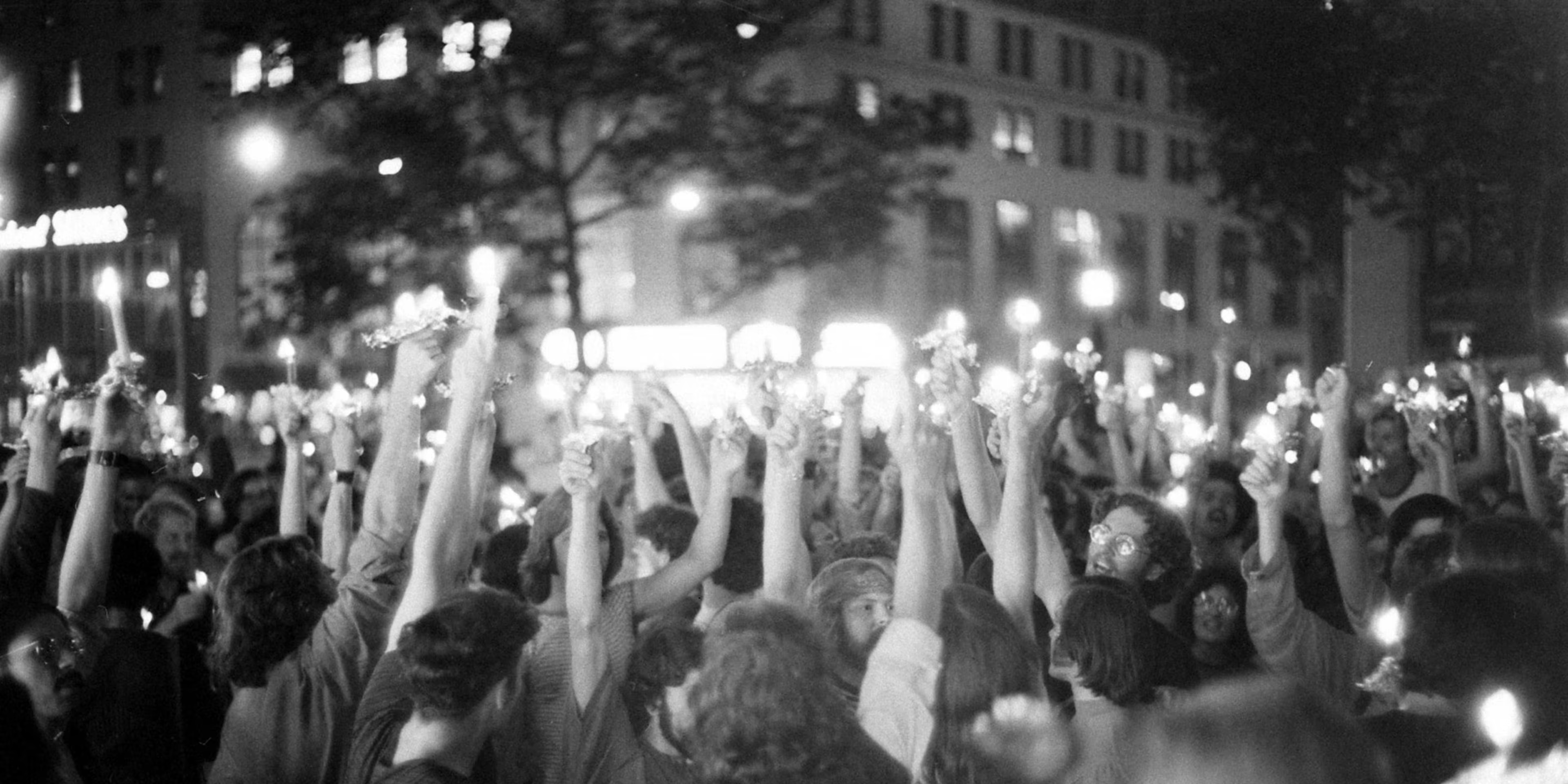
Marsha P. Johnson: Icon of Queer Resilience
Honoring a Trailblazer in Queer History
Marsha P. Johnson is one of the most celebrated figures in queer history, remembered not only for her role in the Stonewall Uprising but also for her unwavering dedication to LGBTQIA+ resilience. Known for her radiant flower crowns, bold personality, and refusal to be silenced, she became a beacon of strength and joy in a world that often tried to erase her.
Why Marsha P. Johnson Matters
To understand Marsha’s impact, we must first look at the world she lived in. In the 1960s, being openly LGBTQIA+ was not only dangerous but illegal in many parts of the United States. In New York City, laws criminalized same-sex relationships and even restricted how people could dress. “Cross-dressing” laws were routinely used to target transgender women and drag queens, with police requiring individuals to wear at least three articles of clothing that matched the sex they had been assigned at birth.
Queer bars, often the only safe gathering places for LGBTQIA+ people, were subject to constant raids. The Stonewall Inn itself was run by the Mafia, because mainstream establishments refused to serve queer people. Even in these supposed safe havens, patrons faced the risk of arrest, police brutality, and having their names published in newspapers, which could mean losing jobs, housing, and family ties.
For trans women of color, the risks were even higher. They were often forced into survival sex work because discrimination left them with few options for employment. Violence from police and civilians alike was a daily reality. In this hostile environment, simply existing as a queer or trans person was an act of defiance.
A Radical Act of Joy
It was within this culture of repression that Marsha P. Johnson chose to live authentically. She walked the streets of Greenwich Village adorned in sequins, flowers, and vibrant thrift store finds, daring the world to see her joy when society expected her to hide in shame. She greeted cruelty with kindness, hardship with generosity, and violence with resilience.
Marsha’s life reminds us that resilience is more than survival… it is the refusal to give up beauty, community, and love in the face of systemic oppression. Her existence challenged the belief that queer people had no place in public life, and her visibility inspired others to embrace their identities unapologetically.

Who Was Marsha P. Johnson?
Early Life in New Jersey

Marsha P. Johnson was born Malcolm Michaels Jr. on August 24, 1945, in Elizabeth, New Jersey. Growing up in a working-class African American family, she was raised alongside six siblings. From an early age, Marsha’s gender expression set her apart. She began wearing dresses as a child, but the constant bullying and violence she faced forced her to suppress that side of herself. Like many queer youth of the era, she learned early that safety often meant silence.
A Leap Toward Freedom in New York City
After graduating high school in 1963, Marsha left Elizabeth with little more than a bag of clothes and $15. She moved to New York City, where Greenwich Village had become a gathering place for queer and trans people searching for community.
The Village was one of the few neighborhoods where it was possible, though not safe, to live openly. This move marked the beginning of Marsha’s lifelong resilience. She arrived with no resources, often experiencing homelessness, but still created a space for herself in a city that punished those who lived outside the norm.
“Pay It No Mind”
In New York, Marsha embraced her identity fully. She adopted the name Marsha P. Johnson, with the “P” famously standing for “Pay it no mind.” This phrase became her signature response when questioned about her gender. More than a clever comeback, it was a declaration of dignity… an insistence that her existence did not need defending.
Her name itself was resilience in action: a joyful, unapologetic statement in a world determined to make her feel small.
A Presence in the Village
By the late 1960s, Marsha was a recognizable figure in Greenwich Village. With her flower crowns, sequined dresses, and radiant smile, she embodied visibility at a time when most queer people lived in hiding. She became known for her kindness, often sharing what little money or food she had with friends and strangers alike.
Marsha was also a performer with the drag troupe Hot Peaches, which blended political satire with campy theater. Through performance, she carved out not just survival but joy, offering laughter and beauty as resistance to the violence that surrounded her community.
Marsha and the Stonewall Uprising
The Climate of Rebellion
By the late 1960s, tensions between the queer community and law enforcement in New York City had reached a breaking point. Police raids on gay bars were routine, humiliating, and violent. Officers often lined patrons against the wall, checked IDs, and arrested people for violating “cross-dressing” laws. Trans women, drag queens, and queer youth were disproportionately targeted, with their lives regularly upended by criminal records, beatings, or exposure in newspapers.
Despite this constant harassment, the Stonewall Inn became a gathering place for the most marginalized queer people: homeless youth, trans women of color, and working-class gay men. It was far from glamorous, but it was theirs. And in June 1969, when police stormed the bar yet again, the community refused to back down.


Marsha’s Role at Stonewall
Marsha P. Johnson’s name is forever linked with the Stonewall Uprising. Some reports suggest she may not have been there on the first night, while others credit her with throwing one of the first bottles or bricks. What is clear is that Marsha was deeply involved in the uprising as it unfolded over several days. She stood on the front lines, confronting police and encouraging others to resist.
Marsha’s presence at Stonewall wasn’t just symbolic, it was revolutionary. As a Black trans woman, her visibility in the fight challenged not only police authority but also the exclusion of trans people and people of color from the mainstream gay rights movement. Her resilience showed that liberation had to include those most marginalized.
From Riot to Movement
The Stonewall Uprising sparked a new era of queer history. It transformed scattered pockets of resistance into an organized LGBTQIA+ rights movement. Pride marches, political organizations, and activist networks grew from that moment of defiance.
For Marsha, Stonewall was not the end of her fight, it was the beginning. She carried the spirit of resilience from those nights in June into the years that followed, dedicating her life to activism, community care, and visibility for trans and queer people who were too often left behind.
Activism and STAR
Building a Movement Beyond Stonewall
The Stonewall Uprising was only the beginning for Marsha P. Johnson. While many credited Stonewall as the birth of the modern LGBTQIA+ rights movement, the reality was more complex. Much of the early organizing was led by white, middle-class gay men who sometimes pushed trans people, drag queens, and queer youth of color to the margins. Marsha and her closest ally, Sylvia Rivera, knew that real liberation had to include everyone—not just those with the privilege of blending into the mainstream.
Did You Know?
STAR was one of the first trans-led organizations in the world, founded in 1970, and provided housing for queer and trans youth who had nowhere else to turn.

The Birth of STAR
In 1970, Marsha and Sylvia co-founded Street Transvestite Action Revolutionaries (STAR), one of the first organizations in the United States to focus on the needs of transgender and homeless queer youth. At a time when even mainstream gay rights groups excluded trans voices, STAR boldly proclaimed that trans women and street queens were not expendable but essential to queer history and resilience.
STAR was both radical and deeply practical. Marsha and Sylvia secured a building in the East Village and turned it into STAR House, where they housed homeless LGBTQIA+ youth. They provided food, clothing, and safety, often funding it through their own street work. Their activism was not just about demanding rights from the government—it was about building a community that could survive despite neglect and hostility from society at large.
Resilience in Action
Marsha’s work with STAR demonstrated her unwavering resilience. She knew firsthand the struggles of poverty, police harassment, and exclusion, yet she poured what little she had into helping others. STAR challenged not only the violence of the outside world but also the failures of mainstream LGBTQIA+ movements to uplift their most vulnerable members.
Marsha and Sylvia’s vision laid the groundwork for today’s queer activism that emphasizes intersectionality, understanding that liberation must address race, gender identity, class, and sexuality together. Their legacy continues to inspire trans-led organizations around the world.
The Resilience of Marsha P. Johnson
Living on the Margins
Marsha P. Johnson’s life was not easy. She lived much of it in poverty, often experiencing homelessness or relying on the kindness of others. Trans women of color in the 1970s and 1980s faced extreme discrimination that limited access to housing, employment, and health care. Survival sex work was often one of the only means of income, and with it came constant danger from both police and clients.
Marsha also lived with mental health struggles, including what friends described as breaks from reality. In a society with little compassion for mental illness, especially for queer and trans people, she received minimal support. Despite this, she never stopped showing kindness to those around her, offering clothes, food, and emotional care to anyone who needed it.
Facing Violence with Courage
Police harassment was a constant in Marsha’s life. She was arrested countless times, beaten by officers, and regularly targeted simply for existing as a Black trans woman. Violence from strangers was also an ever-present threat. Yet she refused to let fear define her. She continued to walk the streets of Greenwich Village in vibrant flower crowns and sequined gowns, choosing visibility when invisibility might have been safer.
Marsha’s resilience was not only about surviving it was about insisting on living fully and joyfully, even when society tried to strip that away.
Joy as Resistance
Perhaps the most remarkable thing about Marsha P. Johnson was her ability to radiate joy. Friends remembered her as generous to a fault, sharing what little she had even when she was struggling herself. She found expression through performance, joining the drag theater troupe Hot Peaches, where she blended comedy, music, and camp into a powerful celebration of queer identity.
Her laughter, her smile, and her presence were all forms of resistance. By embracing joy in a hostile world, Marsha showed that resilience means more than enduring oppression… it means creating beauty and love in spite of it.
Legacy and Recognition
A Life Cut Short
Marsha P. Johnson’s life ended tragically in July 1992 when her body was found in the Hudson River. Police initially ruled it a suicide, but friends and activists insisted she was not suicidal and pointed to years of harassment and violence against her. For decades, her death remained unsolved, symbolizing how society often ignored violence against trans women of color. In 2012, renewed activist pressure led the New York Police Department to reopen the case, reflecting a shift toward taking crimes against LGBTQIA+ people more seriously.
Honoring Her Contributions
Despite the struggles she endured, Marsha’s legacy has grown tremendously in the decades since her passing. She has been recognized in documentaries such as The Death and Life of Marsha P. Johnson and celebrated through plays, books, and art. Schools, libraries, and community organizations across the country now include her story in LGBTQIA+ history curricula.
In 2020, New York State announced plans to build a monument to honor Marsha P. Johnson and Sylvia Rivera, the first permanent public monument in the United States dedicated to transgender women. The park in Brooklyn formerly known as East River State Park was also renamed Marsha P. Johnson State Park, ensuring her name and story live on in public spaces.
A Legacy of Queer Resilience
Marsha’s impact extends far beyond physical memorials. The Marsha P. Johnson Institute, founded in her honor, continues her work by protecting and uplifting the rights of Black trans people. Activists and organizers worldwide cite her as a source of inspiration, proof that one person’s courage can ignite a movement.
Her legacy embodies the heart of queer history: resilience, joy, and defiance in the face of oppression. For today’s LGBTQIA+ community, remembering Marsha is not only about honoring the past but also about carrying her fight for justice into the future.

Marsha’s Enduring Legacy
- She is recognized as one of the central figures in the history of LGBTQIA+ resilience.
- The Marsha P. Johnson Institute advocates for Black trans lives.
- Marsha P. Johnson State Park in Brooklyn is named in her honor.
Carrying Marsha’s Legacy Forward
Marsha P. Johnson’s story is not just history… it is a call to action. Her life reminds us that queer resilience is not abstract, but lived every day in the face of injustice. She fought for those pushed to the margins, built community when society turned its back, and showed that joy itself can be revolutionary.
Today, LGBTQIA+ people still face violence, discrimination, and erasure. Trans women of color in particular continue to be disproportionately targeted, just as Marsha was in her lifetime. Remembering her means committing to a future where every queer person has safety, dignity, and the freedom to live openly.
Marsha’s famous words, “Pay it no mind,” were more than a catchphrase, they were a philosophy. They challenged a world that tried to reduce her to shame and instead demanded that she be seen in her full humanity. That spirit endures whenever queer people choose to live authentically, to support one another, and to fight for justice.
Celebrating Marsha P. Johnson is not just about honoring one extraordinary woman, it is about carrying forward her vision of liberation for all.


