
Why You Can’t Relax Around People (Even When They’re Kind)
If you can’t relax around kind people, your nervous system may still be scanning for danger. This post explains why and offers gentle ways to practice safety.

If you can’t relax around kind people, your nervous system may still be scanning for danger. This post explains why and offers gentle ways to practice safety.

Gender identity is not always fixed or easy to define. In this article, we explore what it means to be genderqueer or genderfluid, how identity and expression can evolve over time, and why self-discovery can be an empowering part of the queer journey. Understanding these identities helps create space for authenticity, reflection, and self-acceptance.

Chosen family is built, not found. This guide offers trauma-aware steps for creating real connection when trust is hard and your history makes you cautious.

If you’re always braced, it doesn’t mean you’re broken. This trauma-aware guide explains why your body stays on alert and what can help you soften, little by little.

A brief “Our Journey” note on why we write about safety, belonging, and self-trust, and what to expect from our Spring 2026 12-week editorial arc. Patreon subscribers can look forward to a Q1 impact statement in March.

What does safety feel like in your body when you grew up bracing for rejection? This piece explores “safe enough” love, nervous system green flags, and gentle ways to notice belonging without forcing it. You will also find a one minute check in practice and a soft closing blessing for the road.

Many queer people live on alert because it once kept them safe. This gentle guide names 7 common signs your body may still expect danger, even when life is calmer now. You will find grounding language, small practices you can try this week, and reminders that survival mode is not a personal failure.

Valentine’s Day can feel especially heavy when you’re queer and alone. This reflection holds space for loneliness, missed timelines, small town isolation, and quiet healing. If tonight feels louder than usual, you’re not behind, broken, or unlovable. You’re still becoming, and you’re not the only one.

Black queer people have long carried a disproportionate share of the labor, risk, and leadership behind queer liberation. This reflection honors their contributions with care, context, and historical honesty, naming the cost of that work and why remembering Black queer history accurately still matters today.

Being drawn toward service is not about visibility, sacrifice, or proving worth. It is about community care, boundaries, and choosing how to contribute in ways that are honest and sustainable. This reflection explores how service begins quietly, grows through trust, and remains grounded when it is rooted in alignment rather than performance.

Feeling broken after trauma does not mean you are. This trauma-informed reflection explores how queer nervous systems adapt to harm, why survival responses are not character flaws, and how healing can unfold through safety, patience, and self understanding.

After years of living in survival mode, joy can feel unfamiliar or even unsafe. This personal reflection explores queer joy after trauma, hyper-vigilance, and learning to trust safety again.

In moments of state violence and moral crisis, LGBTQ+ communities have always turned to one another. This reflection looks at the present moment through the lens of history, remembrance, and the collective power that emerges when communities refuse to be erased.

A personal reflection on queer self acceptance, learning to stop apologizing for who you are, and choosing peace over being understood. This piece explores boundaries, self respect, and the quiet confidence that comes from no longer shrinking yourself for others.

Sometimes love is present but acceptance is not. This reflection explores queer grief, conditional love in family relationships, and the emotional cost of being partially accepted, while affirming the right to choose wholeness and surround yourself with people who love you exactly as you are.

Audre Lorde was a Black lesbian poet who turned silence, illness, and marginalization into language for survival. Her work still teaches queer resilience today.

2025 was loud, exhausting, and heavy for a lot of people. As we step into 2026, this is a moment to let go, reclaim our energy, and remember that change is possible when we choose hope, community, and action. Even if we are a little singed, we can still rise together queer and unbroken.

A gentle, politicized invitation into 2026 for queer and trans people tired of hustle culture and hollow resolutions. This piece imagines queer futures rooted in rest as resistance, righteous anger, and the relationships that carry us forward together.

2025 was heavy for queer and trans communities. This year in review reflects on what we survived, what we built together, and what we carry forward into 2026.

Long winter nights can feel especially heavy for queer and trans people. This gentle guide offers simple, low-barrier queer rituals for comfort, grounding, and survival when you are alone, tired, or healing.

For many queer and trans people, home has not always been a place of safety or belonging. Especially around the holidays, family expectations can deepen feelings of grief, anger, and isolation. This essay explores what queer belonging can look like when home isn’t safe, including chosen family, community care, and small ways to build a sense of home on your own terms.

Queer history is not just a story of tragedy or progress. It is a lineage of resistance shaped by survival, mutual aid, cultural preservation, and radical care. This article traces erased queer and trans movements and ancestors whose work continues to shape how resistance lives on today.

As we enter 2026, LGBTQIA+ rights face new challenges and important moments of progress. This guide explores the five biggest fights to watch, from healthcare and book bans to misinformation, political shifts, and mental health. Learn what these changes mean for our communities in the year ahead.

Winter can be a heavy season for queer and trans people. Shorter days, longer nights, trauma triggers, and rising anxiety all play a part. This guide explores how seasonal changes affect LGBTQIA mental health and offers evidence-based tools, resources, and hope to help you move through the dark months with support and resilience.

Supporting queer-owned businesses is a simple way to uplift our community during the holidays. This guide highlights ten LGBTQ-owned brands and shares why choosing queer creators makes a real difference for visibility, resilience, and community care.

The end of the year can feel heavy, but there is power in choosing gratitude. Through queer history, chosen family, and the safe spaces that carry us, this reflection invites you to honor what you survived and name one thing you want to carry forward into the new year.

Winter has always held special meaning for queer communities. From ancient solstice rituals to modern chosen family gatherings, LGBTQIA+ people have long created their own sources of light during the darkest time of year. This article explores the rich history, resilience, and winter traditions that continue to shape queer life today.

The holidays can feel complicated for LGBTQIA+ people, which is why safe and affirming spaces matter so much this time of year. This piece explores how queer communities create connection, comfort, and joy through chosen family, local hubs like District Dive in Orlando, and community care that carries people through the season.

Addiction in the queer community does not happen in a vacuum. This guide explores why substance use is higher in LGBTQ+ life, the role of trauma and coping, the realities of meth, alcohol, chemsex, and opioids, and the harm reduction practices that keep people safe. It also highlights the healing power of chosen family and community support, offering compassion, evidence, and resources for anyone who needs hope.

During Pride, I heard a familiar question: “Why so many letters and flags?” This reflection explores what LGBTQIA+ stands for, how it evolved, and why visibility and inclusion matter for every identity in our community. There is room at the table for everyone.

As the holidays approach, many LGBTQIA+ people reflect on the families who raised us and the ones we’ve built along the way. This cornerstone piece explores the meaning of chosen family – its history, love, loss, and the enduring power of belonging within queer life.

Allyship is not an identity; it is an action. True allies listen, learn, and show up even when it is uncomfortable. Ally: It’s a Verb, Not a Noun explores what active allyship looks like in daily life, how to move beyond performative gestures, and how to support the queer and trans community through education, empathy, and meaningful action.

James Baldwin transformed pain into poetry and truth into liberation. His life and words lit a fire that still burns within the struggle for queer freedom. Through his courage and clarity, he showed that love and truth are the heart of liberation itself.

Draped in shimmering capes and radiating warmth, Walter Mercado transformed television into a space of love, hope, and healing. The beloved Puerto Rican astrologer defied gender norms, uplifted Latinx audiences, and reminded the world that authenticity and compassion are universal. His legacy continues to inspire generations to live and love… with much, much love.

Leslie Jordan’s life was a testament to joy, faith, and fearless authenticity. From his Southern Baptist roots to his rise as a beloved queer icon, he turned pain into laughter and faith into freedom. In this LGBTQIA+ History Month spotlight, we honor his resilience, humor, and light that continue to inspire generations.

Alan Turing was a brilliant mathematician, codebreaker, and queer pioneer whose work at Bletchley Park helped end World War II and laid the foundation for modern computing. Yet the same nation he served punished him for his identity. His story is one of genius, injustice, and resilience… a reminder that truth and authenticity can outlast persecution.

Harvey Milk’s courage reshaped queer history and political activism. Explore the real story behind the legend… one of authenticity, community, and enduring hope.

Pauli Murray was a queer Southern activist, lawyer, and faith leader whose courage helped shape civil rights, feminism, and LGBTQIA+ equality. Their story reminds us that truth and love can change the world when lived with conviction, compassion, and hope.

I didn’t plan to write this today, but seeing the reminder that it’s the anniversary of Matthew Shepard’s death brought me to tears. His story shaped how I understood the world as a young queer person trying to survive in the South. Matthew’s courage, kindness, and authenticity still light the way for so many of us who continue to live out loud, unbroken, and full of love.

Bayard Rustin was the openly gay strategist who introduced Dr. Martin Luther King Jr. to nonviolence and organized the 1963 March on Washington. Despite prejudice, Rustin’s resilience left a lasting mark on both civil rights and queer history. His story reminds us that justice and authenticity must walk hand in hand, making him a vital ancestor to honor during LGBTQIA+ History Month.

Gladys Bentley was a trailblazing blues singer of the Harlem Renaissance whose tuxedos, powerful voice, and unapologetic queerness defied expectations. Her story is a vital part of queer jazz history and a lasting symbol of queer resilience.

Human gender diversity has always existed… across cultures, faiths, and centuries. This powerful exploration unites science and spirit to reveal how trans and nonbinary identities are part of humanity’s natural design. Learn how history, biology, and compassion come together to show that gender diversity is not new, not unnatural, and never wrong.
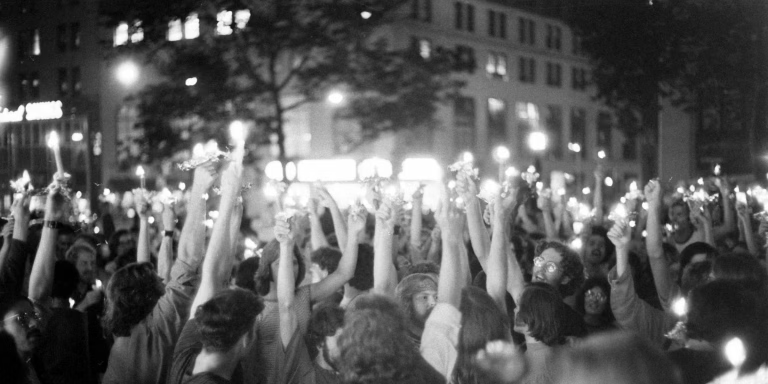
It’s October 2025, which means it’s LGBTQIA+ History Month. To begin our series, we honor Marsha P. Johnson, an icon of queer history and LGBTQIA+ resilience. From the Stonewall Uprising to co-founding STAR, Marsha’s fearless activism and joyful spirit shaped the fight for equality and continue to inspire today’s movement for liberation.

The government shutdown is more than political gridlock. Anti-LGBTQ riders in funding bills and stalled federal programs mean queer lives are on the line.

LGBTQ rights in 2025 are under attack through healthcare bans, book censorship, sports restrictions, and even new threats to marriage equality. This article breaks down what’s at stake, how these laws impact our community, and the actions we can take together to defend equality and build hope.

LGBTQ spirituality is a journey of healing, resilience, and discovery. From affirming faith communities to personal practices like meditation and ritual, queer people continue to find strength in Spirit. This blog explores research, traditions, and lived experiences that show how spirituality can help us heal from trauma and embrace the sacred in our identities.
End of content
End of content
Every blog post on Queer and Unbroken has a story behind it. The questions I wrestled with. The moments that didn’t fit in the final draft. The parts that felt too tender or too personal to publish here.
On Patreon, I share Behind the Blog, a reflection series that explores what shaped each piece and why it mattered to write it.
Both free and paid Patreon members get access.
If these stories resonate with you, you’re warmly invited to join us.